
In modern semiconductor and advanced materials manufacturing, the ability to cut faster, cleaner, and thinner defines the competitiveness of production. Whether slicing silicon, sapphire, SiC, or quartz, precision cutting is no longer a secondary process — it’s the foundation of yield, quality, and throughput.
At the heart of this revolution is the diamond wire saw, a superabrasive cutting tool that has transformed wafer slicing and material processing through controlled precision and engineered efficiency.
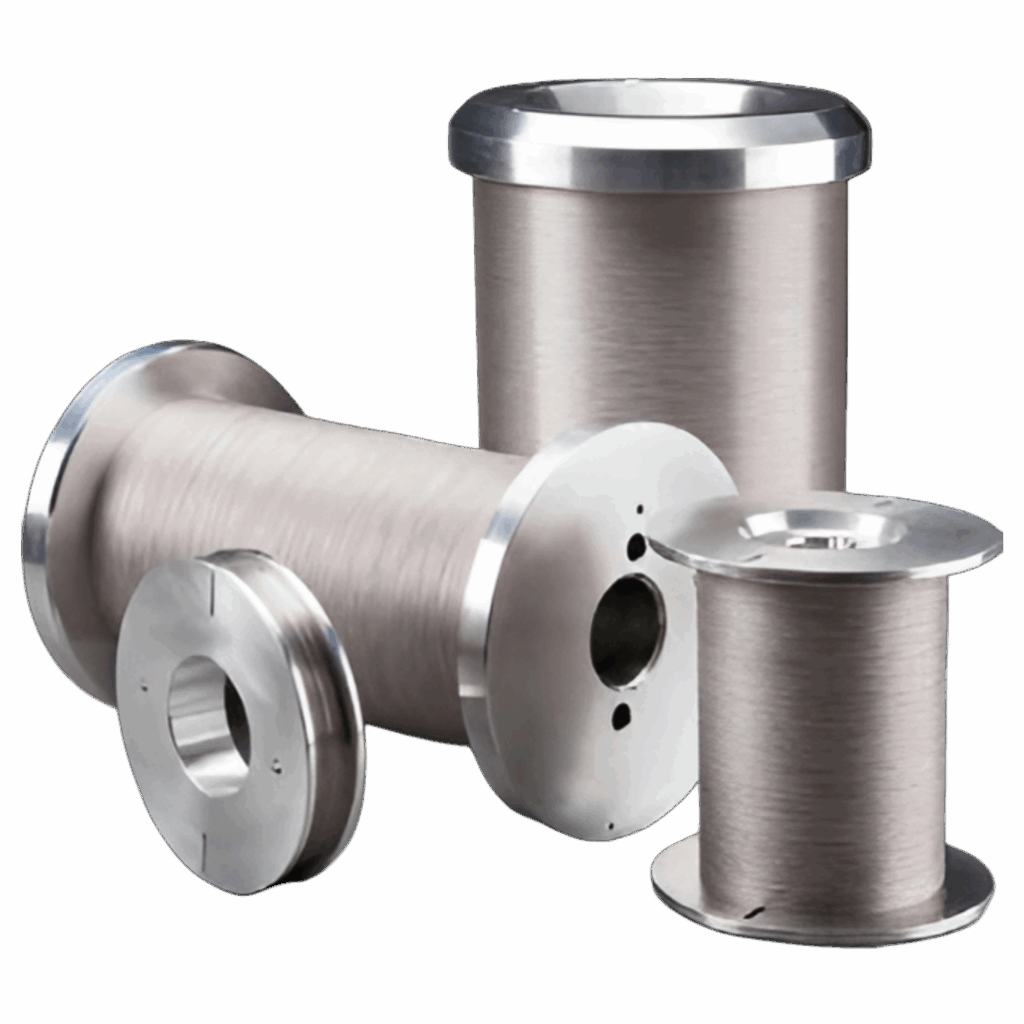
🔹 What Is a Diamond Wire Saw?
A diamond wire saw is a high-precision cutting tool that uses a fine steel wire coated with industrial-grade diamond abrasives. These diamond particles are either electroplated or resin/metal-bonded onto the wire surface, forming the cutting edge capable of slicing through the hardest materials known to manufacturing.
Unlike traditional slurry-based sawing, diamond wire saws rely on fixed diamond technology, where abrasive grains are permanently bonded to the wire. This allows for:
- Higher cutting accuracy
- Cleaner wafer surfaces
- Reduced kerf loss (material wastage)
- Elimination of slurry handling and disposal
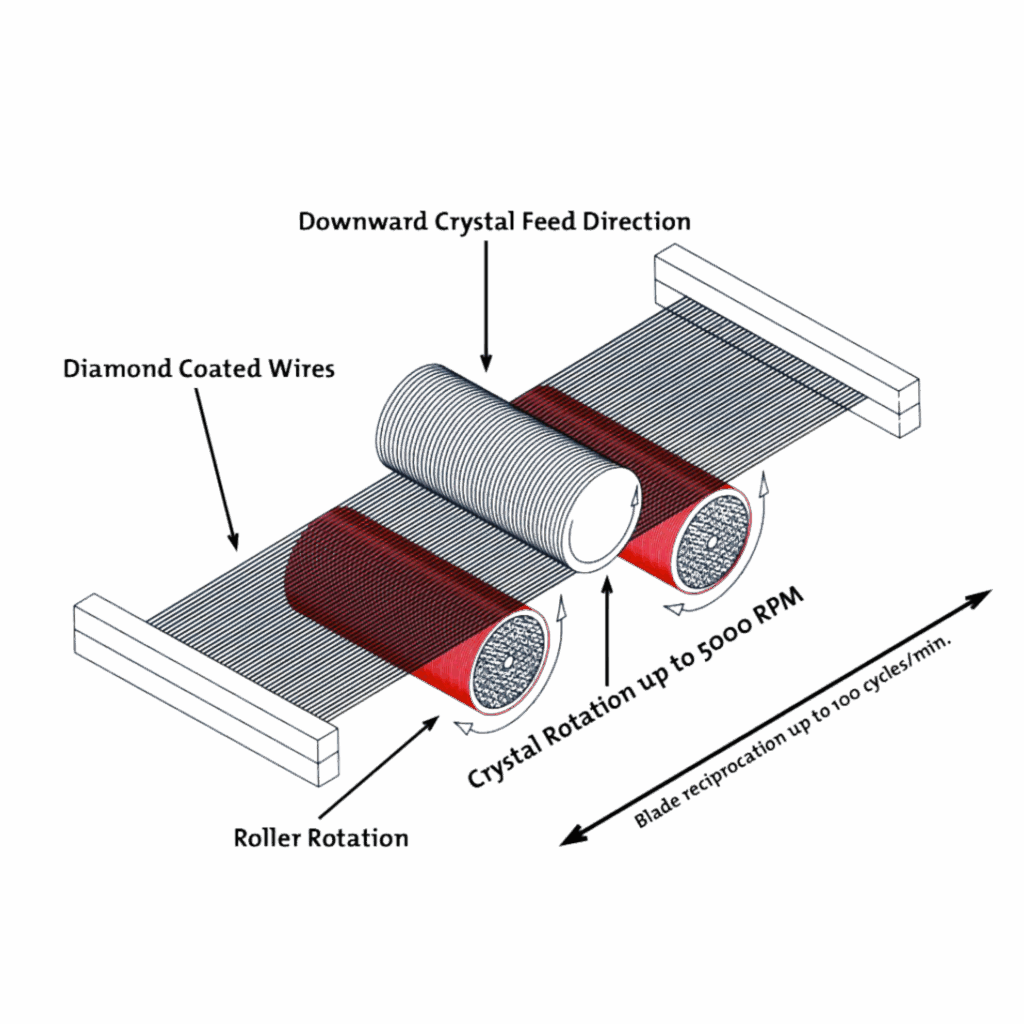
🔹 How Diamond Wire Sawing Works
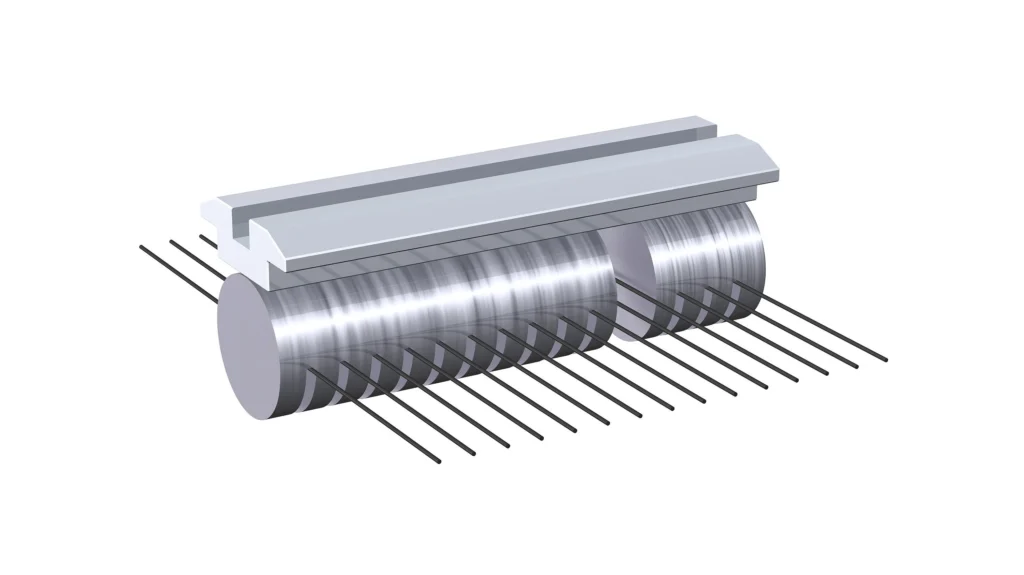
During cutting, the diamond wire moves at high linear speed while being tensioned across the workpiece. The exposed diamond grits micro-cut the surface through abrasion rather than fracture, producing ultra-flat wafers with superior surface integrity.
This controlled abrasion minimizes subsurface damage, allowing wafers to proceed directly to lapping or polishing stages — improving process efficiency and yield.
Core Components:
- Wire Core: Typically spring steel, 150–400 µm diameter.
- Abrasive Type: Synthetic diamond, D7–D91 grit size.
- Bond System: Nickel electroplated or resin bond, depending on cutting conditions.
- Spool Length: Customized for single-wire or multi-wire saw platforms.
🔹 Types of Diamond Wire Saw Bonds
1. Electroplated (Fixed-Diamond) Wire
- Nickel bond holds diamond grains in a single layer directly onto the wire.
- Delivers fast cutting speed, consistent grain exposure, and long tool life.
- Ideal for hard materials like sapphire, silicon carbide (SiC), and ceramics.
- No slurry required — environmentally cleaner and lower maintenance.
2. Resin-Bonded Diamond Wire
- Designed for fine-finishing and delicate substrates such as solar silicon or gallium arsenide (GaAs).
- Provides softer cutting behavior and improved surface finish.
- Common in photovoltaic wafer production and semiconductor material thinning.
3. Metal-Bonded Diamond Wire
- Offers superior grit retention and high thermal stability.
- Used for hard-to-cut crystals and precision slicing where dimensional accuracy is critical.
🔹 Advantages of Diamond Wire Saw Technology
| Feature | Benefit |
| High Cutting Speed | Up to 3–5× faster than slurry wire sawing |
| Reduced Kerf Loss | Thinner cutting width, maximizing material yield |
| Superior Surface Finish | Ra < 1.0 µm achievable on silicon and sapphire |
| Environmental Efficiency | Eliminates slurry recycling and disposal |
| Process Stability | Uniform grit distribution ensures consistent cutting |
| Compatibility | Works with both single-wire and multi-wire machines |
🔹 Applications Across Precision Industries
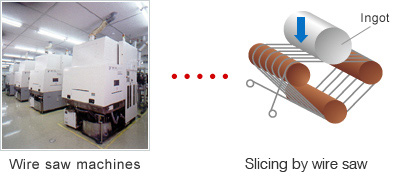
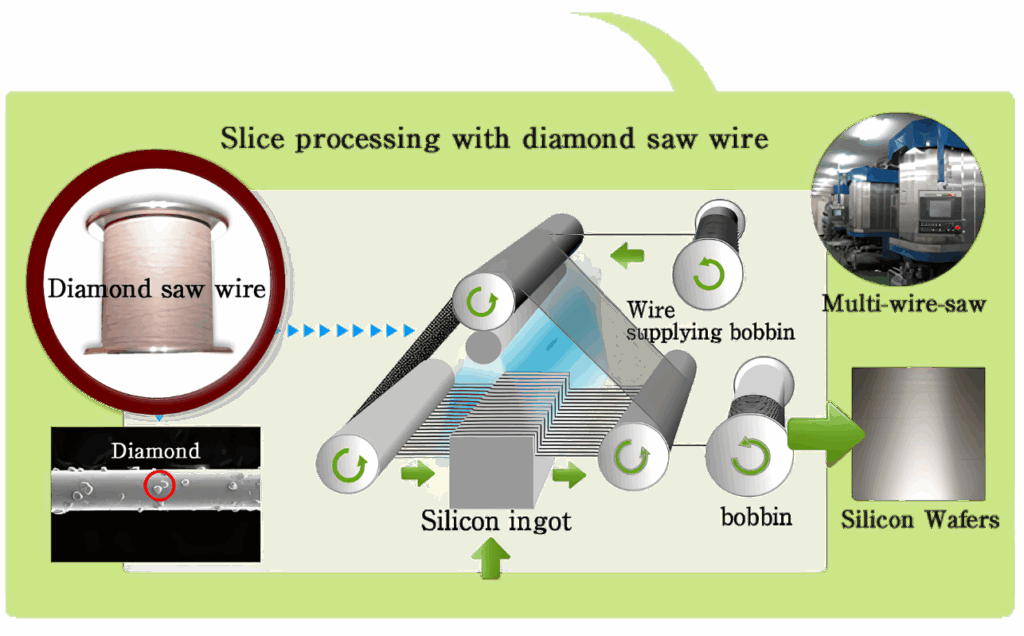
Semiconductor Wafer Production
- Silicon, SiC, and sapphire wafer slicing
- LED, MEMS, and IC substrate manufacturing
Photovoltaic (Solar) Industry
- Monocrystalline and polycrystalline silicon ingot cutting
Optoelectronics
- Sapphire and quartz glass substrates for optical components
Advanced Materials
- SiC wafers for power electronics and EV components
- Ceramic substrates and brittle material cutting
Research & Development
- Precision material preparation for academic and R&D laboratories
🔹 Technical Insight: Fixed-Diamond vs. Slurry-Based Sawing
| Parameter | Fixed-Diamond Wire | Slurry Wire |
| Cutting Speed | 3–5× faster | Slower |
| Surface Quality | <1 µm Ra | <3 µm Ra |
| Environmental Impact | No slurry waste | Requires slurry recovery |
| Cost Efficiency | Lower total cost of ownership | Higher operating cost |
| Wafer Accuracy (TTV) | <15–20 µm | 30–40 µm typical |
Result: Fixed-diamond technology significantly enhances throughput and wafer yield — a clear advantage for next-generation semiconductor manufacturing.
🔹 Choosing the Right Diamond Wire for Your Application
When selecting a diamond wire, key parameters include:
- Core diameter: Determines wire strength and flexibility.
- Grit size: Larger grits for faster cutting; smaller grits for smoother finish.
- Diamond concentration: Impacts cutting aggressiveness and tool life.
- Bond strength: Balances grit retention and self-sharpening.
For example:
- D20–D25 diamond on 180–250 µm core → optimal for SiC and sapphire wafers.
- Fine-grit D7–D15 on 120–150 µm core → best for thin wafer finishing or GaAs.
🔹 Sustainability and Efficiency in Modern Wafer Fabrication
Switching to fixed-diamond wire sawing represents not only a productivity gain but also a major step toward green manufacturing. By removing slurry use and waste treatment, diamond wire sawing reduces both environmental footprint and operational cost — aligning with ESG objectives in semiconductor and solar industries.
🔹 UniGrit Technologies Advantage

At UniGrit Technologies, we deliver precision-engineered diamond wire saws designed for semiconductor, photovoltaic, and advanced materials industries.
Our diamond wire solutions are built on:
- Uniform diamond distribution for consistent cutting action
- High grit retention for stable performance and extended lifespan
- Customized wire core diameters and grit sizes tailored to customer platforms
- Clean cutting performance with minimal subsurface damage
UniGrit’s technical team supports customers through application-specific optimization, ensuring the right balance between cut speed, surface finish, and wafer quality.
Because in wafer slicing — precision is not optional; it’s engineered.
The diamond wire saw has redefined precision material processing — offering faster, cleaner, and more sustainable wafer slicing.
By understanding the wire structure, bond type, and abrasive characteristics, engineers can select the optimal solution for their process and materials.
With its expertise in superabrasive engineering, UniGrit Technologies stands at the forefront of delivering next-generation diamond wire solutions that empower industries to cut smarter, faster, and cleaner.
Contact us at solutions@unigrit-tech.com for free consultation on the right diamond wire saw for your unique material cutting applications.