
In precision grinding, performance begins at the bond. The bond system is not just a holding medium—it is the engineering foundation that determines how diamond or cubic boron nitride (CBN) abrasives interact with workpieces, manage heat, and sustain cutting performance over time.
Whether you’re grinding carbide tools, hardened steels, ceramics, or semiconductor materials, understanding the bond types behind your superabrasive wheels is crucial for achieving consistency, efficiency, and superior surface finish.
This guide explains each major bond type used in diamond and CBN grinding wheels — resin, metal, vitrified, electroplated, and hybrid — and how they apply across industries such as automotive, aerospace, semiconductors, and toolmaking.
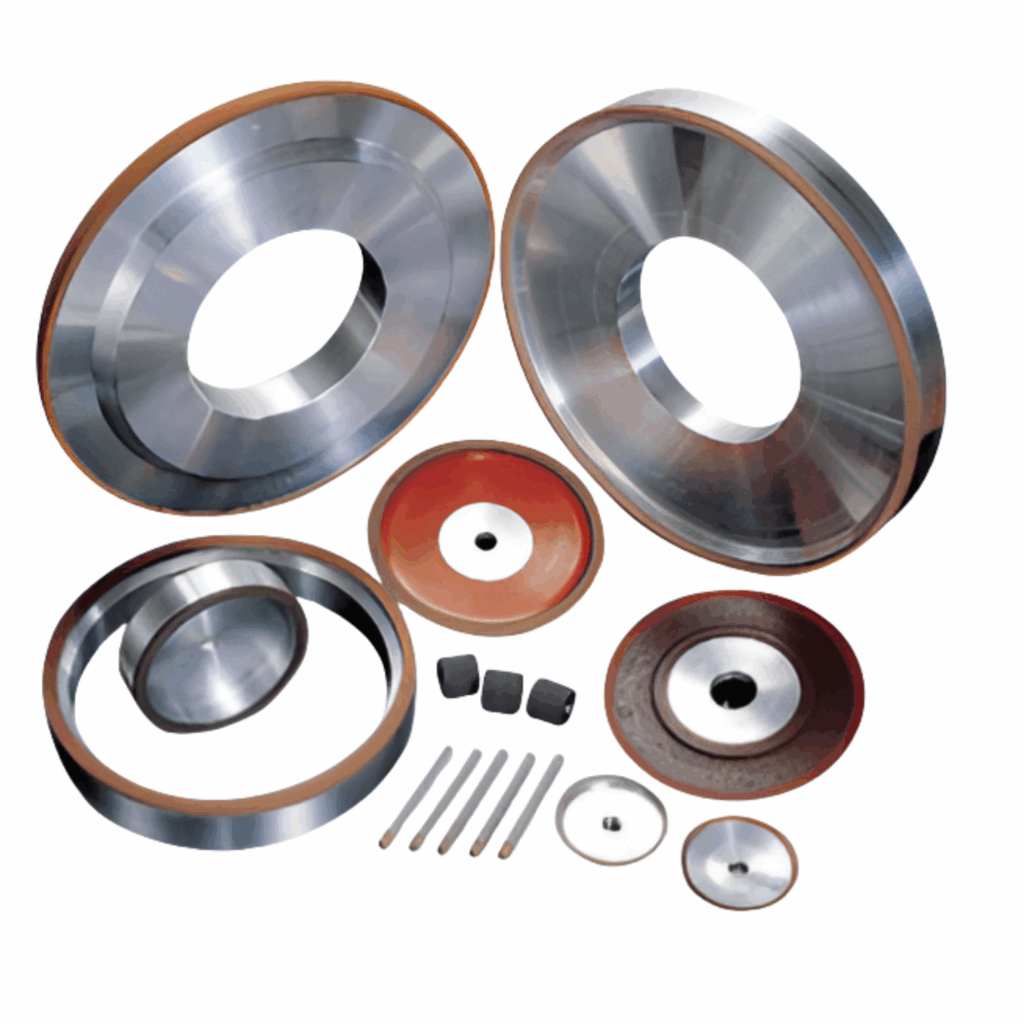
🔹 1. Resin Bond Diamond and CBN Grinding Wheels
Overview
Resin bond is the most commonly used bonding system in superabrasive wheels. It consists of a polymer-based binder that holds diamond or CBN grits together, allowing controlled wear and self-sharpening behavior during grinding.
Key Properties
- High stock removal rates
- Cool cutting with reduced thermal damage
- Excellent surface finish quality
- Easier to true and dress compared to metal or vitrified bonds
Applications
- Tool and Cutter Grinding: Ideal for sharpening carbide end mills, drills, and inserts.
- Automotive Components: Camshafts, crankshafts, and valve seats.
- Semiconductor Industry: Wafer edge grinding and fine finishing.
Recommended Processes:
Finish grinding, form grinding, and re-sharpening operations requiring balance between cut aggressiveness and surface smoothness.
Best Suited For: Carbide, HSS, and non-ferrous materials.
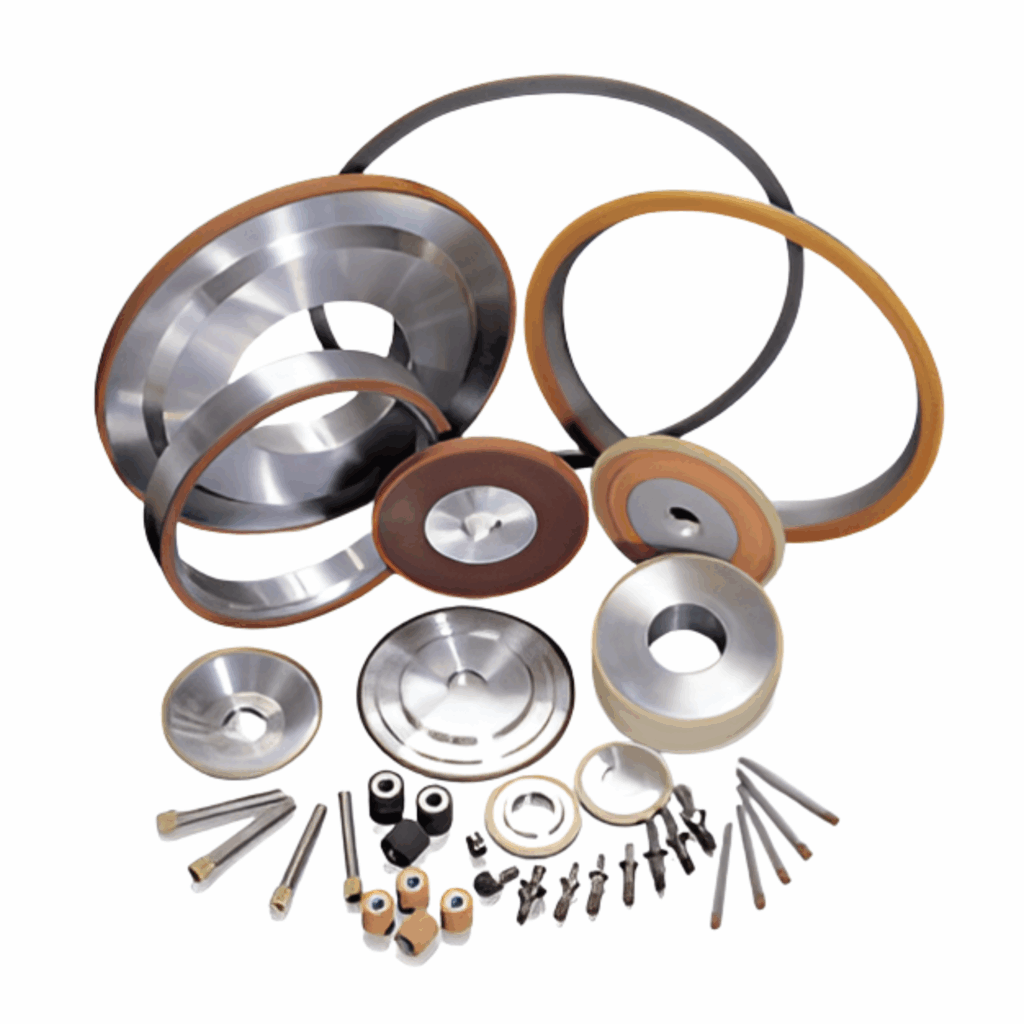
🔹 2. Vitrified Bond Diamond and CBN Grinding Wheels
Overview
Vitrified bond wheels use a porous ceramic matrix that provides rigidity and superior coolant penetration. These are typically used in applications demanding both form accuracy and surface integrity at high cutting speeds.
Key Properties
- High porosity for better coolant flow and chip evacuation
- Excellent thermal conductivity and dimensional control
- Maintains form even under high loads
- Easy dressing and re-profiling
Applications
- Automotive: Bearing races, transmission gears, and cam lobes.
- Aerospace: Nickel-based superalloys and titanium grinding.
- Tool Industry: PcBN and PCD tool edge preparation and finishing.
Recommended Processes:
High-precision creep-feed grinding and CNC-controlled form grinding where wheel rigidity and temperature control are critical.
Best Suited For: Hardened steels, tool steels, and high-speed steels (HSS).
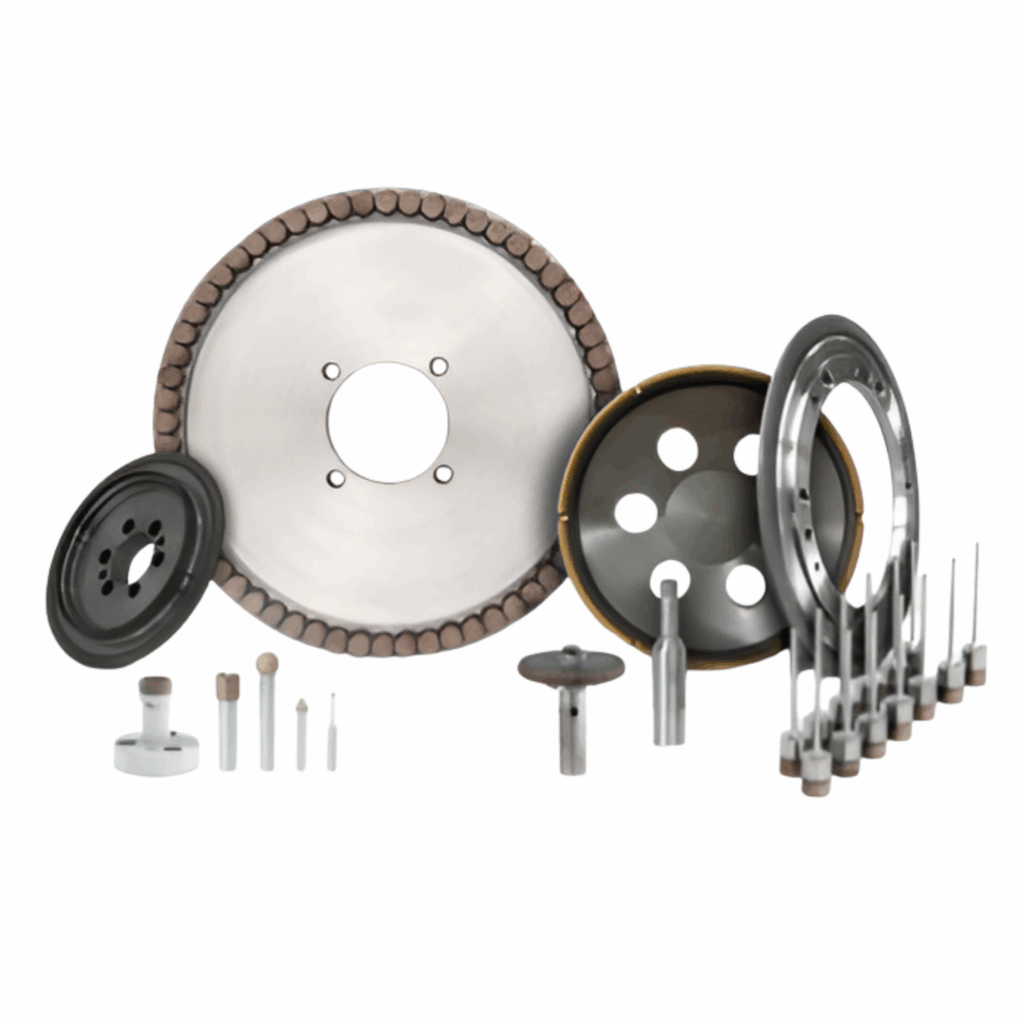
🔹 3. Metal Bond Diamond and CBN Grinding Wheels
Overview
Metal bond wheels feature abrasive grains sintered into a metallic matrix — typically bronze or cobalt. This structure provides exceptional grit retention and mechanical strength, making it ideal for high-load and precision profile applications.
Key Properties
- Long wheel life and form stability
- Excellent wear and heat resistance
- Superior profile accuracy and dimensional control
- Requires higher dressing forces
Applications
- Aerospace Components: Precision grinding of turbine blades and engine parts.
- Toolmaking: Form grinding of carbide and ceramics.
- Semiconductor: Glass and sapphire wafer slicing and dicing.
Recommended Processes:
Creep-feed grinding, precision profiling, and hard material removal.
Best Suited For: Tungsten carbide, ceramics, and glass composites.
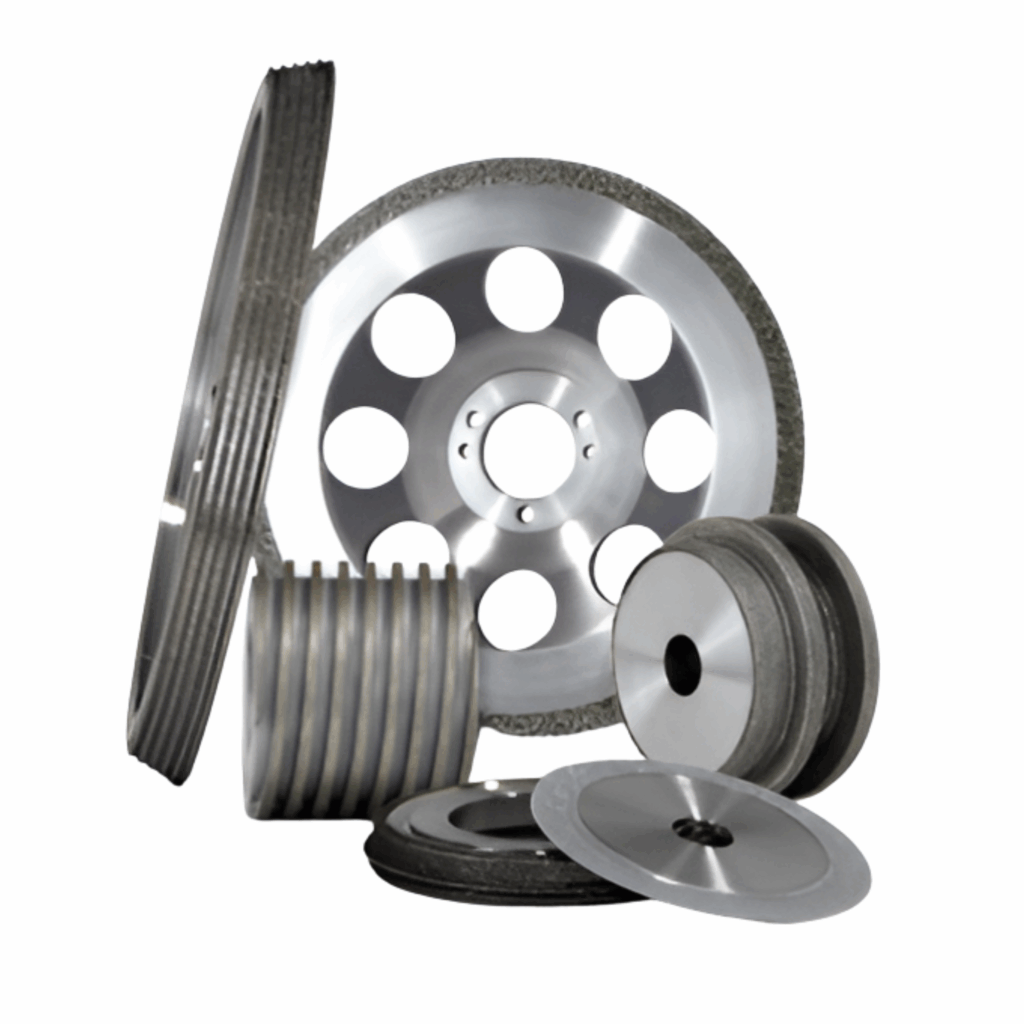
🔹 4. Electroplated Bond Diamond and CBN Grinding Wheels
Overview
In electroplated wheels, diamond or CBN particles are single-layer bonded to the wheel surface via a metallic nickel plating. This design ensures the sharpest possible cutting edges and maximum exposure of abrasive grains.
Key Properties
- Aggressive cutting action
- Zero dressing requirement
- Excellent form accuracy retention
- Ideal for intricate shapes and profiles
Applications
- Semiconductor & Electronics: Silicon wafer slicing and sapphire polishing.
- Medical Devices: Grinding of precision surgical instruments.
- Tool Reconditioning: Flute grinding, notch grinding, and chamfering.
Recommended Processes:
High-speed dry or wet grinding where form stability and sharpness are essential.
Best Suited For: Carbide, ceramics, glass, and composite materials.
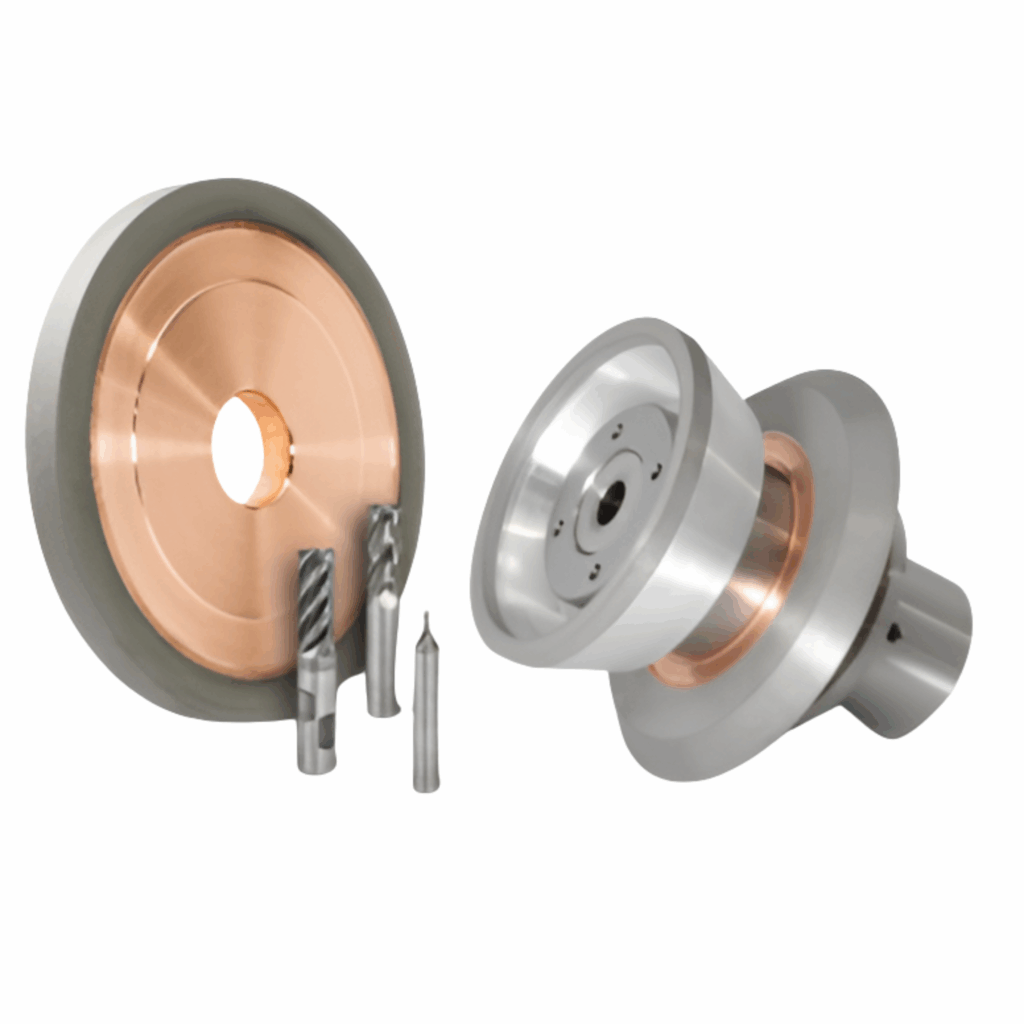
🔹 5. Hybrid Bond Diamond and CBN Grinding Wheels
Overview
Hybrid bonds combine the strength of metal bonds with the free-cutting ability of resin bonds, resulting in a balanced performance suitable for both roughing and finishing applications.
Key Properties
- Reduced grinding force and power consumption
- Longer life than resin bond; faster cut than metal bond
- Stable form retention and reduced dressing intervals
- Excellent for automated and high-volume grinding
Applications
- Automotive and Aerospace: High-precision component finishing and tool regrinding.
- Toolmaking: Cylindrical grinding of carbide and HSS tools.
- Semiconductor: High-speed edge grinding and thinning processes.
Recommended Processes:
CNC-controlled tool grinding, flute grinding, and profile finishing where balance between sharpness and durability is critical.
Best Suited For: Carbide, ceramics, and advanced composites.
Conclusion: The Bond Behind Every Precision Grind
The bond is the unsung hero of every diamond and CBN grinding wheel. By understanding the distinct characteristics of resin, metal, vitrified, electroplated, and hybrid bonds, engineers can make informed decisions that directly influence tool performance, part quality, and production efficiency.
At UniGrit Technologies, we translate that understanding into reality — delivering superabrasive grinding solutions engineered for precision industries that demand nothing less than perfection.

Why Choose UniGrit Technologies
At UniGrit Technologies, we engineer diamond and CBN grinding wheels that combine:
- Advanced bond formulations for optimal balance between sharpness and durability
- Custom geometry and grit selection for application-specific needs
- Precision dressing solutions (including rotary and stationary diamond dressers)
- Expert consultation to match the ideal bond and abrasive type to your process
Whether you’re machining hardened steels for aerospace or grinding brittle wafers for semiconductors, UniGrit provides the technical insight and tool design expertise to help you achieve consistent precision, superior finishes, and longer wheel life.
Reach out to us at solutions@unigrit-tech.com for all your precision grinding applications needs.