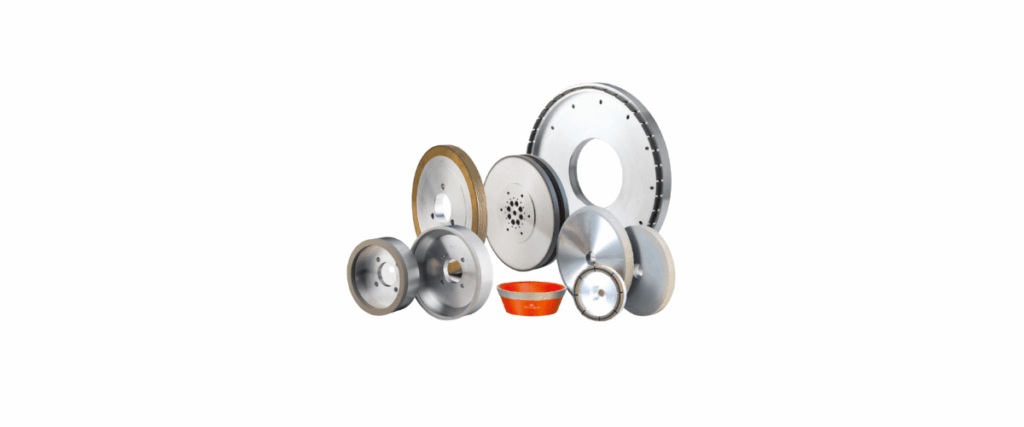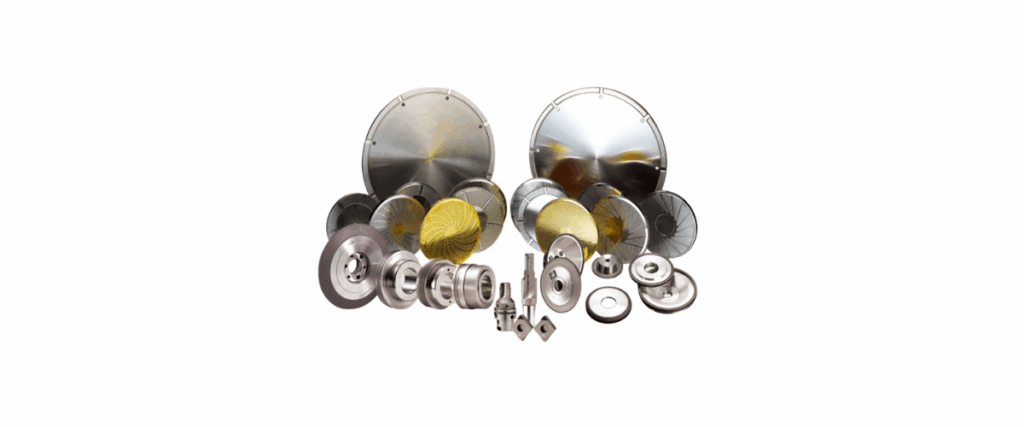
Discover everything about diamond and CBN grinding wheels — what they are, how they work, and why they are essential for precision grinding in automotive, aerospace, semiconductor, and tool industries.
Introduction: The Power of Superabrasives
If you’ve ever wondered how smartphones get thinner, why cars run quieter, or how jet engines achieve extreme precision, the answer often lies in superabrasive grinding wheels. The two most powerful types are the diamond grinding wheel and the CBN (cubic boron nitride) grinding wheel.
These are not ordinary abrasives. They are at the cutting edge of precision grinding technology, enabling industries to machine the hardest materials with unmatched accuracy.
What is a Diamond Grinding Wheel?
A diamond grinding wheel uses synthetic or natural diamond crystals as the abrasive. Since diamond is the hardest material known, it’s ideal for grinding tungsten carbide, ceramics, composites, glass, and semiconductor wafers.
Key advantages of diamond wheels:
- Exceptional hardness and wear resistance
- Ability to grind brittle, non-ferrous materials
- Superior surface finish in ultra-precision machining
What is a CBN Grinding Wheel?
CBN grinding wheels are made from cubic boron nitride — the second hardest material after diamond. Unlike diamonds, CBN is chemically stable when in contact with steel, making it the go-to choice for hardened steel, bearing steel, tool steel, and automotive powertrain components.
Advantages of CBN wheels:
- High thermal stability (up to 1,400 °C)
- No chemical reaction with ferrous metals
- Longer tool life in grinding hardened steels
- Consistent precision for gears, bearings, and cams
Types of Superabrasive Bonds
To hold diamond or CBN grits, different bond systems are used. Each affects tool life, grinding performance, and cost.
- Resin Bond – Excellent for carbide tool grinding (fluting, end mills).
- Vitrified Bond – Porous, rigid, great for bearings and automotive shafts.
- Metal Bond – Strong and durable, used in glass, ceramics, and semiconductors.
- Electroplated Bond – Single layer, ideal for form grinding and dicing.
- Hybrid Bond – Combines resin and vitrified/metal for balance of sharpness and life.
Industrial Applications of Diamond and CBN Grinding Wheels
These wheels drive progress across multiple industries:
1. Automotive and Transportation
- CBN grinding wheels are used for camshafts, crankshafts, CV joints, and gears.
- Results: quieter engines, smoother transmission, and extended component life.
2. Tool Manufacturing & Cutting Tools
- Diamond wheels sharpen carbide drills, end mills, and PCD/PCBN inserts.
- Results: higher cutting efficiency and cost savings in mass production.
3. Semiconductor & Electronics
- Wafer back-grinding wheels, CMP pad conditioners, and dicing blades.
- Results: thinner, more powerful chips for smartphones, tablets, and AI processors.
4. Display & Glass Industry
- Diamond edge wheels grind LCD, OLED, and smartphone glass.
- Results: stronger, scratch-resistant screens with precision edges.
5. Aerospace & Energy
- CBN wheels grind turbine blades, jet engine parts, and superalloys.
- Results: safer flights, fuel-efficient engines, and sustainable energy solutions.
6. Construction & Stone Cutting
- Diamond saw blades, wire saws, and core drills.
- Results: faster, safer infrastructure and civil engineering projects.
How Diamond and CBN Grinding Wheels Improved the World
- Electronics miniaturization – Diamond back-grind wheels enable thinner wafers.
- Automotive evolution – CBN wheels made electric and hybrid vehicles quieter.
- Sustainability – Superabrasives last longer, reduce waste, and save energy.
- Safety and healthcare – Precision medical implants and stronger infrastructure.
- Enabling new materials – Superalloys, ceramics, and composites are machinable thanks to superabrasives.
Why Superabrasive Wheels Are the Future of Grinding
Conventional abrasives like aluminum oxide or silicon carbide can no longer meet the demands of modern industries. As materials become harder, lighter, and stronger, diamond and CBN wheels remain the only viable solution.
Conclusion
The diamond grinding wheel and the CBN grinding wheel are more than just consumables — they are key enablers of advanced manufacturing. From aerospace turbines to smartphone chips, they shape the future of industries and improve everyday life.
Whenever you drive a car, use a phone, or fly in an airplane, chances are that a superabrasive wheel played a crucial role.
In short: Diamond and CBN wheels are not just grinding tools — they are the hidden engine of progress.